On-Demand Webinar
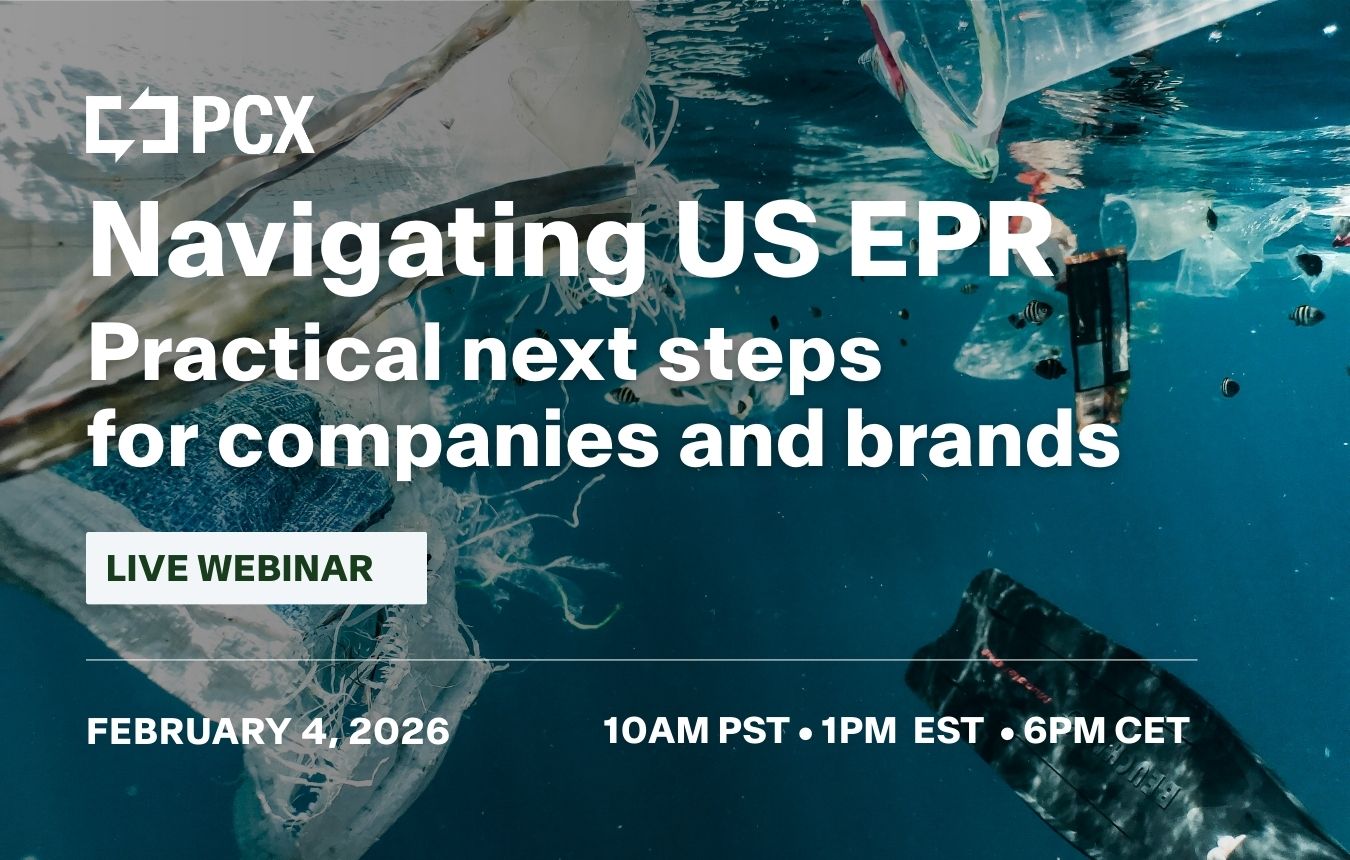
US Extended Producer Responsibility (EPR) Compliance: What Brands Need to Know for 2026
Watch the webinar
February 4, 2026
Extended Producer Responsibility (EPR) requirements are expanding rapidly across the United States, and 2026 will be a critical year for brands.This webinar provides a practical overview of the current US EPR landscape, what’s already in force, what’s coming next, and how companies should be preparing for 2026 compliance obligations, including California SB 54 and emerging state programs. The session is designed to help brands move beyond high-level awareness and understand what EPR compliance requires in practice across reporting, data management, and internal coordination.
Complete the form to watch the webinar now.
In this session, we cover:
- • The current US Extended Producer Responsibility (EPR) landscape and how state programs are evolving
- • Which EPR programs are already in force, and which states are coming next
• The latest status of California SB 54
• The importance of your 2023 baseline in California
- • An introduction to California source reduction and how malus fees actually work
- • Key 2026 reporting timelines and why upcoming deadlines matter for multi-state operators
- • What EPR compliance looks like in practice, including reporting requirements, data challenges, and cross-functional coordination
- • Practical steps companies can take now to prepare for 2026 EPR obligations and reduce compliance risk
-
This webinar is relevant for professionals involved in:
- • Sustainability and ESG strategy
- • Packaging and materials management
- • Regulatory compliance and legal teams
- • Operations and supply chains
- • Finance teams supporting EPR reporting and fee planning
-
If EPR compliance is in your remit, this session provides a clear, practical foundation.Watching the on-demand session gives you:
- • A clear overview of the US EPR regulatory landscape
- • Practical context to support 2026 planning and internal alignment
- • Language and framing you can use in conversations with internal stakeholders